
Tottenham Drop Into Relegation Zone as De Zerbi Loses First Game 1-0 at Sunderland

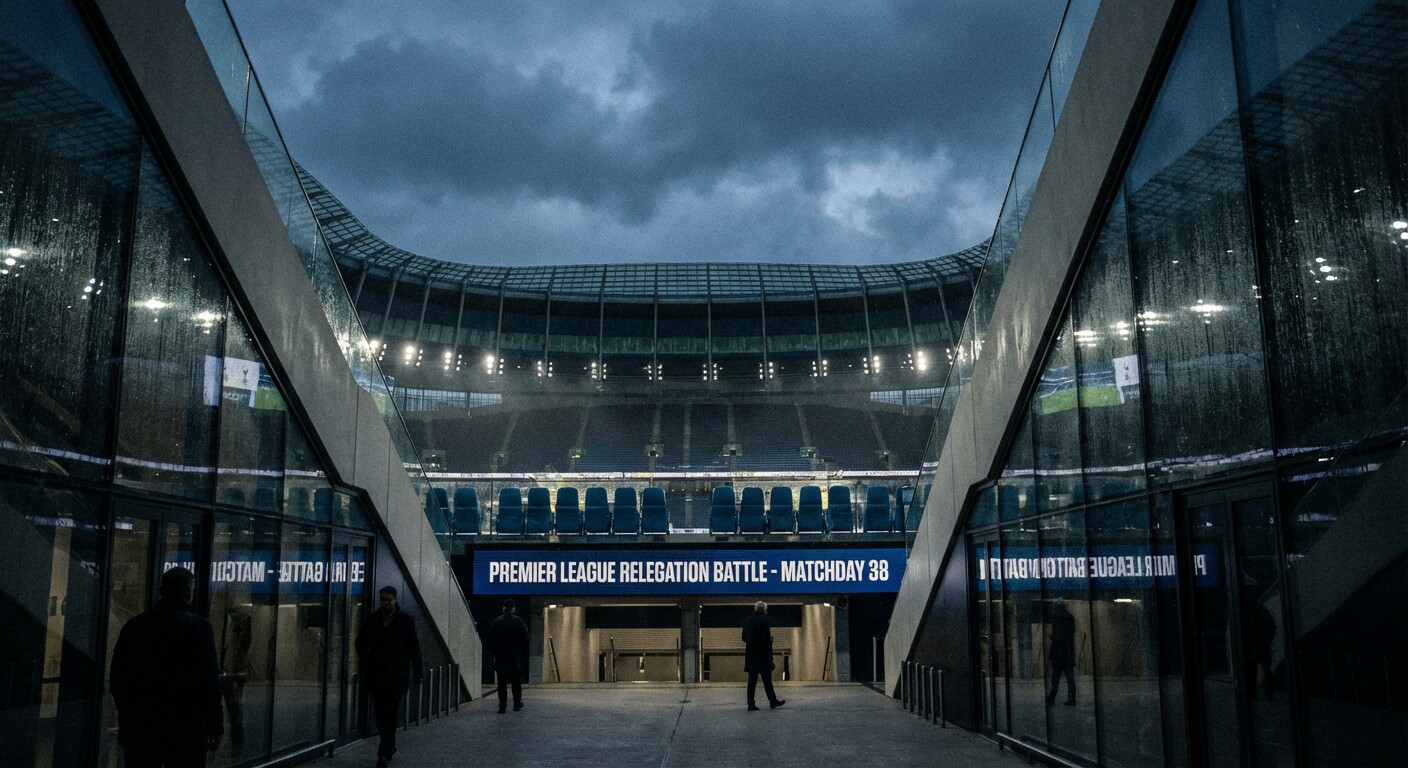
There are low points in a football club's history, and then there is the kind of moment that reframes the entire context of a season. Tottenham Hotspur experienced the latter on April 12, 2026, when Roberto De Zerbi's debut as head coach ended in a 1-0 defeat at Sunderland's Stadium of Light, a result that left the club languishing in the Premier League relegation zone with just six games remaining. For the first time in the history of the modern Premier League, Tottenham find themselves in the bottom three at such a late stage of the season, a statistical detail that underlines just how catastrophic this campaign has been. Nordi Mukiele's deflected strike in the 56th minute proved to be the only goal of a match that Spurs were unable to threaten in any meaningful way, and the final whistle confirmed that De Zerbi, who agreed to a five-year deal when he took the job, has inherited a situation that will test every dimension of his managerial capability before he can even think about implementing the progressive football philosophy that made his name at Brighton and Marseille.
De Zerbi Inherits a Club in Freefall
To understand the full scale of the challenge that Roberto De Zerbi faces, it is necessary to look beyond the single result at Sunderland and examine the remarkable sequence of non-achievement that preceded his arrival. Tottenham have not won a Premier League match in 2026. Not a single one. Their winless streak in the league stretches to fourteen consecutive games, a run that encompasses the entire calendar year and has seen the club take just five points from the forty-two that were available across those fixtures. Only three times in Premier League history has a club started a calendar year with a longer winless run, and on all three previous occasions, the clubs in question were relegated from the top flight at the end of that same season. The historical precedents are not merely concerning; they are, for Tottenham supporters who are aware of them, genuinely terrifying.
The managerial situation that produced this collapse has been chaotic. Igor Tudor, who replaced the previous manager mid-season, was himself unable to arrest the decline and ultimately departed when the club's board concluded that a fresh approach was required. De Zerbi was brought in with significant fanfare, his reputation as one of the most tactically innovative coaches in European football preceding him and creating genuine hope among supporters that his arrival could spark the kind of transformation that a team in genuine danger of relegation so desperately needs. That hope survived exactly one match before reality asserted itself at the Stadium of Light. The new manager effect that so often produces an immediate lift for struggling clubs was entirely absent, and Tottenham produced the kind of performance that suggests their problems run deeper than tactics or motivation alone.
The Sunderland Defeat: A Story of Abject Struggle
Sunderland, a promoted club who have exceeded all reasonable expectations in their return to the top flight, were entirely comfortable winners. Mukiele's deflected effort in the second half was enough to clinch back-to-back Premier League wins for Regis Le Bris' side, and the manner in which Spurs failed to create any meaningful threat across ninety minutes reflected the fundamental lack of confidence and cohesion that has infected every aspect of the club's attacking play. De Zerbi's high-possession, positionally-demanding style of football requires technical quality, mental clarity and the kind of collective understanding that takes time to develop. Tottenham, who have been mentally fragmented and physically uncertain for months, could not begin to approximate what their new manager demands in the forty-eight hours of preparation time available before his first match in charge.
The evening was made significantly more painful by the sight of club captain Cristian Romero leaving the field in tears following a collision with goalkeeper Antonin Kinsky. The Argentine defender, who has been one of Tottenham's most consistent performers in a desperately inconsistent season, suffered a knee injury that appears likely to end his campaign, removing from the squad one of the few players who had maintained anything close to acceptable performance levels throughout the crisis. For a club that is already battling enormous injury absences and a crisis of confidence, losing Romero in the final weeks of the season represents a blow that could not have come at a worse time.
The Statistics Paint a Devastating Portrait
The specific statistics associated with Tottenham's current situation are almost impossible to process without a degree of disbelief, even for supporters who have been watching the decline unfold week by week throughout the season. Spurs have taken just five points from the last forty-two available in the Premier League. Their fourteen-game winless run in the competition is two matches shy of the club's all-time record winless sequence, set between December 1934 and April 1935. They have now spent a weekend in the relegation zone for the first time this late in a Premier League season in the club's history, a fact that carries enormous significance in a division where the psychological impact of being in the bottom three can accelerate the very decline it reflects.
West Ham United's 4-0 demolition of Wolverhampton Wanderers on the Friday before Sunderland vs Spurs had already moved the Hammers out of the relegation zone and into 17th place, placing Tottenham in the bottom three before De Zerbi had even overseen a warm-up session with his new players. Nottingham Forest's subsequent 1-1 draw with Aston Villa moved them two points clear of Spurs. Leeds United's 2-1 win at Manchester United on Monday night put six points between themselves and Tottenham. The landscape around Tottenham is shifting rapidly, and every result involving their relegation rivals carries implications that are becoming increasingly difficult to manage from a psychological perspective. Our comprehensive relegation battle predictions guide explores how the psychological dynamics of the drop zone affect performance, decision-making and collective confidence in precisely these kinds of situations.
What De Zerbi Said and What It Means
Roberto De Zerbi, speaking after the Sunderland defeat, was candid about the difficulty of his situation while refusing to accept that relegation was inevitable. The Italian coach acknowledged that the prospect of dropping out of the Premier League had been affecting his players' performances and had created a psychological burden that was visible in the manner in which the team was approaching games. He spoke of the work that needed to be done to rebuild confidence and collective belief, of the tactical adjustments required to make the squad functional within his system, and of his conviction that the talent within the group was sufficient to produce the results needed to survive. His confidence was not universally shared by observers of the Sunderland performance.
Jamie Carragher, speaking on television after the match, expressed the view that Tottenham looked like a club heading for the Championship, and that even a manager of De Zerbi's quality could not be expected to produce miracles from a squad that appeared to have collectively lost its competitive edge and its belief in its own ability to win football matches. It was a harsh assessment, but one grounded in the reality of what the statistics and performances have consistently shown across the entire calendar year. Understanding how motivation and psychological factors interact with technical quality in high-pressure situations is central to analysing why some clubs in the relegation zone find a way to survive while others succumb to the weight of expectation and fear.
De Zerbi's own record when taking over struggling clubs provides a slightly more optimistic reference point. At Brighton, his debut season began with five consecutive defeats before results turned dramatically and the club embarked on one of the most impressive periods in their Premier League history. The Italian coach has shown before that his methods require time and patience before they produce their full impact, but the specific circumstances at Tottenham, with only six games remaining and the club sitting in the relegation zone, do not permit the luxury of a transitional period. This is not Brighton in the summer. This is a crisis that requires an immediate response.
Six Games to Save a Season
The Premier League relegation battle in the 2025-26 season has developed into one of the most dramatic in recent memory, with multiple clubs separated by small margins and each remaining fixture carrying potentially enormous consequences. Tottenham sit at the bottom of the cluster of clubs fighting to avoid the two remaining relegation places, with West Ham having moved themselves to relative safety with their emphatic win over Wolves and Forest having provided themselves with meaningful breathing room. Leeds, who had appeared to be in genuine danger themselves earlier in the campaign, have pulled themselves clear with timely results including their win at Old Trafford.
For Tottenham, the remaining six fixtures represent what De Zerbi has called, in the manner typical of a man who deals in football metaphors, six finals. Their next match is a home game against Brighton, De Zerbi's former club, a fixture that carries obvious psychological narrative but which also presents, on paper, one of the more winnable games remaining in their schedule. A win against Brighton would not transform the situation, but it would represent proof that De Zerbi's influence can produce a positive result, and in the current climate of complete winlessness, a single victory would carry significance beyond its immediate points value. The end-of-season dynamics that influence how clubs perform when survival is at stake are always complex, but for Tottenham, the requirement is stark: win football matches or face the Championship.
The Long Shadow of History
Tottenham Hotspur have not been relegated from the top flight of English football since the 1976-77 season, an absence from the second tier that stretches back nearly fifty years and represents one of the defining assumptions of the modern game. That they could be facing the end of that unbroken run is something that would have seemed almost inconceivable even a year ago, when the club was planning for a different future and investing in the infrastructure of a Champions League regular. The gap between that expectation and the current reality is one of the starkest illustrations of how quickly fortunes can change in top-flight football when results deteriorate and confidence drains away.
Roberto De Zerbi is a coach whose philosophy and track record suggest he is capable of building something genuinely compelling at Tottenham Hotspur Stadium, if given the time and resources to do so. The immediate question is whether he will still be managing a Premier League club when that work begins in earnest. The answer will be determined across six fixtures that represent the most consequential run of games in the club's recent history, matches in which the difference between success and failure is not a trophy or a European place but the fundamental question of whether Tottenham Hotspur Football Club will be competing in the Premier League next season. For detailed analysis of what the remaining fixtures mean for each of the clubs in danger, our guide on end-of-season motivation and qualification battles provides the framework needed to understand how these final weeks are likely to unfold. The six-game sprint begins at the Tottenham Hotspur Stadium, and De Zerbi's side cannot afford to wait any longer for results to arrive.