
How FIFA Plans to Use Football to Support Gaza’s Recovery

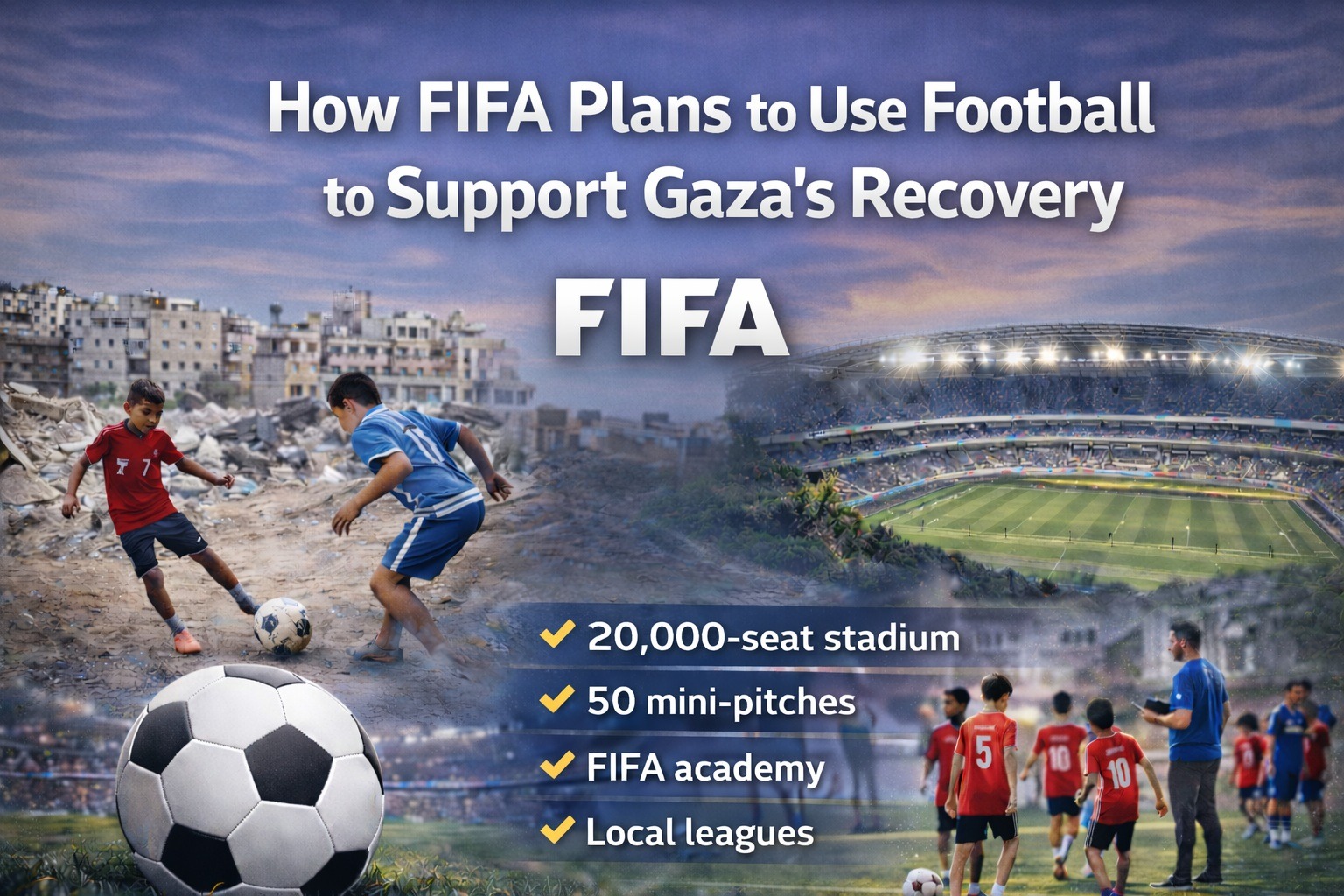
Football is often described as the world’s most powerful unifier — and now it’s being positioned as a tool for rebuilding communities in Gaza.
In a newly announced initiative, FIFA has unveiled an ambitious infrastructure programme designed to contribute to long-term recovery efforts in the region. Rather than focusing solely on elite competition, the plan centers on grassroots access, youth engagement, and economic opportunity through sport. See our getting started guide for how football brings communities together.
A Strategic Partnership Focused on Development
The global governing body of football, FIFA, has entered into a cooperation agreement with the Board of Peace.
The Board, formed under U.S. President Donald Trump, is tasked with encouraging investment and coordinating reconstruction efforts in conflict-affected areas, with Gaza currently a primary focus.
The broader objective is to attract international funding and institutional support aimed at sustainable development once conditions on the ground allow reconstruction to move forward fully.
What the Football Investment Will Include
FIFA’s contribution goes far beyond symbolic support. The proposal outlines a comprehensive football infrastructure package that includes:
50 mini-pitches located near schools and residential communities
Five full-size football pitches distributed across multiple districts
A high-performance FIFA academy to nurture emerging talent
A new 20,000-seat national stadium designed to host major fixtures and events
The scale of the plan reflects a dual focus: rebuilding physical infrastructure while also creating structured opportunities for youth participation.
FIFA President Gianni Infantino described the agreement as a milestone in using football as a driver for post-conflict recovery, emphasizing that the partnership is designed to deliver tangible impact at every stage.
Funding and Economic Impact
According to statements made by Donald Trump, approximately $75 million will be raised for football-related projects tied to the initiative.
Beyond the construction phase, the programme is expected to prioritize:
Job creation linked to building and facility management
Organized leagues for boys and girls
Youth development pathways
Community engagement activities
Support for local businesses connected to sporting events
By combining infrastructure development with structured sporting programmes, the initiative aims to stimulate local economic activity while fostering social cohesion.
Challenges That Remain
While the announcement signals intent, several significant challenges remain. Issues such as disarmament, security conditions, funding stability, and humanitarian access will likely influence the pace and success of implementation.
Large-scale reconstruction projects in conflict-affected regions require coordination across political, humanitarian, and financial institutions — and progress often depends on broader geopolitical developments.
Football as a Platform for Stability
Sport has historically been used as a bridge in divided societies. Structured leagues, youth academies, and community pitches can provide safe spaces, mentorship opportunities, and pathways for personal growth.
If executed effectively, this initiative could position football not just as entertainment, but as a structured framework for rebuilding confidence, opportunity, and shared identity.
Final Perspective
This proposed investment demonstrates how global sporting organizations are increasingly stepping beyond the boundaries of competition and into broader social development roles.
By focusing on grassroots access, large-scale facilities, and youth engagement, FIFA’s plan seeks to embed football into the long-term recovery strategy for Gaza.
Whether it becomes a model for future post-conflict initiatives will depend on execution — but the ambition signals a belief that rebuilding communities can start with something as simple, and as powerful, as a football pitch.