
Arsenal Reach Champions League Semi-Finals for Second Consecutive Season After Nervy Sporting Lisbon Draw
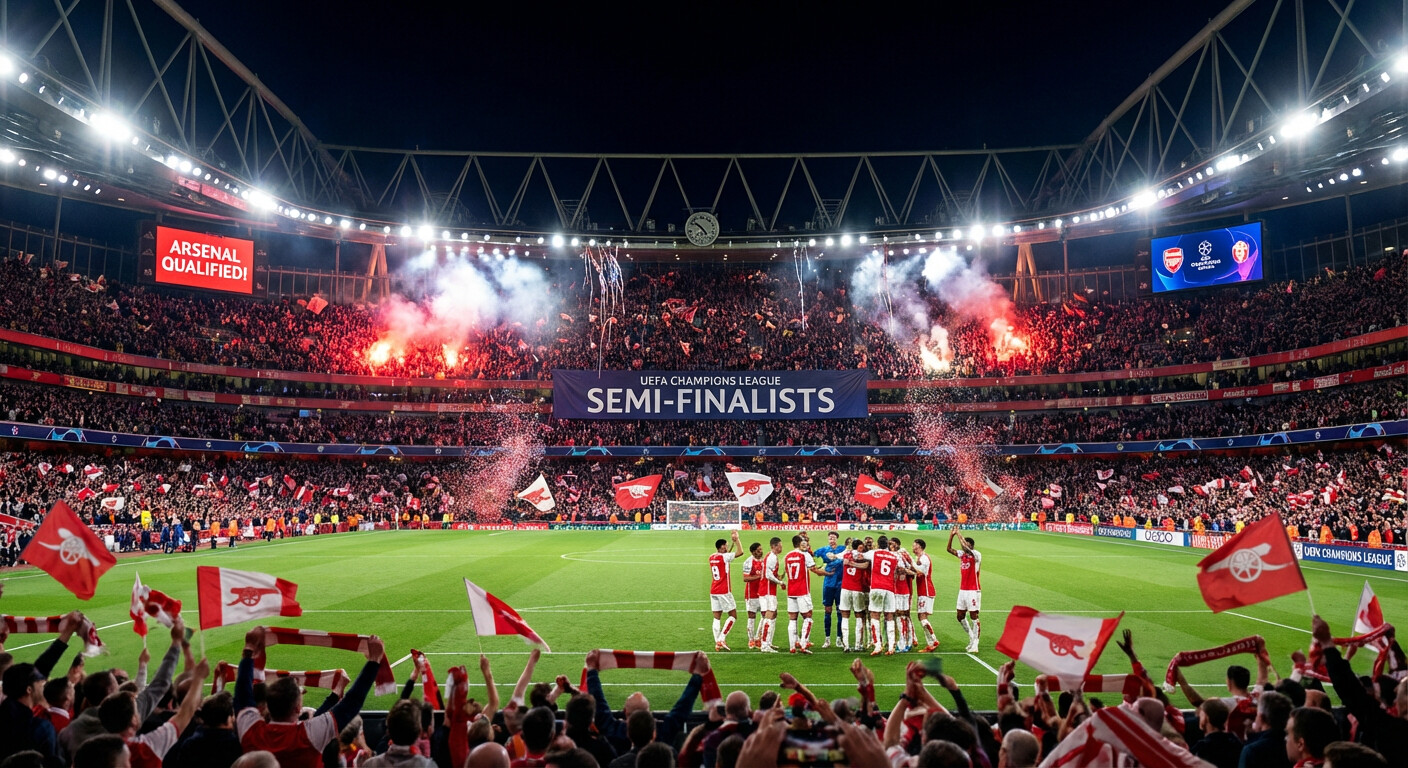
Arsenal are in the Champions League semi-finals for the second consecutive season, a distinction they have never previously achieved in their 140-year history. The Gunners sealed their passage to the last four on April 15, 2026, holding out for a goalless draw against Sporting CP at the Emirates Stadium to advance 1-0 on aggregate, thanks entirely to Kai Havertz's dramatic stoppage-time winner in the first leg in Lisbon a week earlier. It was far from a vintage performance from Mikel Arteta's side. It was, at times, an uncomfortable, nervous occasion that required the brilliance of David Raya on multiple occasions to preserve the clean sheet on which everything depended. But the result is what matters, and the result is everything Arsenal could have hoped for when the draw was made. They are in the final four of the Champions League, and a shot at the club's first European Cup final since 2006 beckons.
A First Leg Goal That Will Live Long in the Memory
The story of this quarter-final cannot be told without returning to the moment that ultimately decided it. Arsenal had travelled to Lisbon on April 7 for the first leg of their last-eight tie and had, for long periods, been frustrated by a disciplined and technically accomplished Sporting side. The Portuguese champions created enough chances to have taken a lead into the second leg, and David Raya produced a magnificent early save to deny Maxi Araujo when Arsenal's defensive organisation was temporarily undone. The match seemed destined for a goalless draw, the kind of result that would have suited Sporting rather more than the Premier League leaders.
Then, in the first minute of stoppage time, everything changed. Gabriel Martinelli, who had been one of Arsenal's more lively performers throughout the evening, drove into the Sporting half and found a perfectly-timed ball into the penalty area. Kai Havertz, arriving late with the composure that has defined the best moments of his time at the club, directed a composed finish past the goalkeeper and sent the travelling Arsenal supporters into rapturous celebration. It was the kind of away goal that changes the entire psychological dynamic of a two-legged European tie, and Arteta's players understood its value immediately. Martin Zubimendi had appeared to equalise in the second half, only for VAR to rule it out for an offside against Viktor Gyokeres in the build-up. Arsenal travelled back to London with a 1-0 lead and the home leg to come, in possession of everything they needed.
A Nervy Night at the Emirates
If Arsenal supporters were expecting a comfortable second leg at the Emirates Stadium, the opening forty-five minutes provided a sharp corrective to that optimism. Sporting, refusing to accept that their Champions League adventure was over, came to North London with an attacking intent that belied their 1-0 deficit, and they nearly found the goal that would have changed everything. Geny Catamo struck the post with a volley just before half-time, a moment that brought the Emirates to a stunned, anxious silence. Had that gone in, Arsenal would have been level on aggregate and under enormous pressure, with Sporting growing in confidence and the Emirates feeling the weight of expectation.
David Raya's contribution across both legs of this quarter-final deserves the highest possible recognition. The Spanish goalkeeper has established himself as one of the finest in European football this season, combining the sweeper-keeper instincts that modern pressing football demands with exceptional reflexes when called upon to make traditional shot-stopping saves. His double save late in the first leg in Lisbon was crucial. His overall authority and composure throughout the second leg helped settle those around him during periods when Sporting's pressure was genuinely threatening. For those interested in how goalkeeping quality impacts European knockout football, our guide to football analysis fundamentals provides essential context on how individual positions shape team outcomes.
Leandro Trossard saw a header crash off Sporting's post late in the second half, a moment that offered Arsenal a brief glimpse of a more comfortable evening before the final whistle confirmed what Havertz's goal had begun. Goalless on the night, 1-0 on aggregate. Arsenal were through. The second leg was not an advertisement for attack-minded football, and Arteta himself acknowledged that his team had not been at their best. But in the business end of the Champions League, pragmatism and defensive resolve can be just as valuable as free-flowing attacking play, and Arsenal's ability to protect a slender advantage over 90 minutes against a technical Portuguese side should not be dismissed as a fortunate escape. Sporting have not won any of their last ten competitive games in England, and have not won away in a European knockout stage since 1970, a historical detail that provides useful context for understanding the challenge they faced at the Emirates.
History Made: Second Consecutive Semi-Final
The achievement of reaching consecutive Champions League semi-finals represents a watershed moment in Arsenal's modern history. The club have not been in the last four of the European Cup since their remarkable run to the final in 2006, when they reached Paris and faced Barcelona, ultimately losing 2-1 in a match that remains one of the most painful occasions in the memories of Arsenal supporters of a certain vintage. What Arteta has constructed is something different in kind from previous Arsenal European campaigns. This is a squad with genuine defensive resilience, a goalkeeper of the highest quality, and a group of players who have demonstrated the ability to manage matches and perform under the specific pressures that knockout European football creates.
The journey to this semi-final included surviving the challenge of managing European and domestic fixture congestion, navigating the particular difficulties of playing on foreign soil in the knockout rounds, and finding winning goals in the most pressurised circumstances imaginable. Our guide on fixture congestion analysis explores exactly how clubs manage these competing demands across a long and arduous European campaign. The fact that Arsenal have done so while simultaneously leading the Premier League title race places this achievement in an even more impressive context.
Arteta's Assessment and Arsenal's Collective Character
Mikel Arteta, speaking after the match, was candid about the performance while remaining entirely focused on the positivity of the result. The Arsenal manager acknowledged that his team had not reached the heights they are capable of, but he also made clear his pride in the mental strength his squad had shown in seeing the job through when the game became difficult and uncomfortable. Arteta has gradually built a culture within Arsenal that treats resilience and collective defensive responsibility as prerequisites rather than optional extras, and that culture was visible throughout a second leg that required grit rather than glamour. The quarter-final win over Sporting confirmed that Arsenal's squad, which has had to manage significant European and domestic commitments simultaneously throughout the season, has the depth and the mental fortitude to cope with the demands of competing on multiple fronts.
Atletico Madrid Await in a Fascinating Semi-Final
The semi-final draw has paired Arsenal with Atletico Madrid, a tie that presents a fascinating tactical contest between Arteta's possession-oriented, high-pressing approach and Diego Simeone's deeply structured, counter-attacking system. Atletico advanced from the quarters by eliminating Barcelona across two legs, winning the first leg 2-0 at the Metropolitano before surviving a dramatic second leg in which Ademola Lookman's goal proved decisive. You can read the full story of Atletico's remarkable quarter-final journey in our coverage of the Atletico vs Barcelona match report.
Simeone's Atletico are arguably the most difficult team in European football to break down when they are set up to defend, and the semi-final will test Arsenal's creative quality and patience in a way that no previous opponent this season has done. The first leg will be played at the Riyadh Air Metropolitano on April 29, with the return at the Emirates on May 6. For a detailed tactical breakdown of what to expect from this semi-final clash, our Champions League contenders guide provides essential context on both clubs' strengths and vulnerabilities in European knockout football.
Arsenal's supporters, who have waited two decades for another night like the one in Paris, will dare to dream. The club's journey from Champions League absentee to consecutive semi-finalist has been one of the defining narratives of English football in the mid-2020s, and what happens in the coming weeks will determine whether this generation of Arsenal players can complete the journey from contenders to champions. The Emirates is ready, the squad is prepared, and the history books are waiting to be written.