
Alex Manninger: Football Mourns the Passing of a Beloved Goalkeeper Aged 48

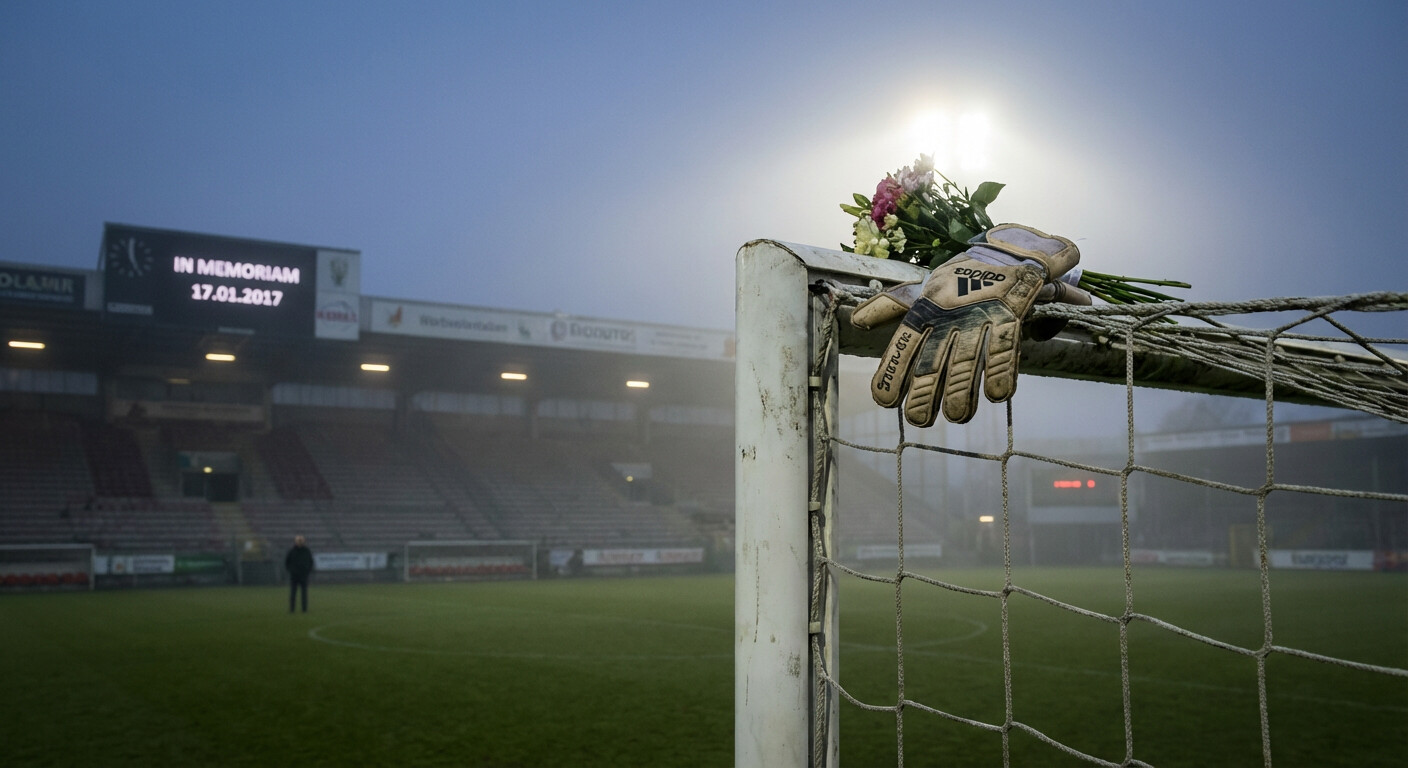
The football world came to a standstill on the morning of April 16, 2026, as news emerged from Austria that Alexander Manninger, the former Arsenal, Juventus and Liverpool goalkeeper, had died at the age of 48. The circumstances were as sudden as they were tragic. Police confirmed that Manninger's car was struck by a local train at an unguarded level crossing near Nußdorf am Haunsberg, a small community outside Salzburg, at approximately 8:20 in the morning. Emergency services arrived swiftly and first responders worked tirelessly to save him, freeing him from the wreckage and administering CPR at the scene. Despite their best efforts, the goalkeeper who had made a career out of making the seemingly impossible possible could not be revived. Alex Manninger was pronounced dead at the scene, and within hours, tributes began flowing in from across Europe and the global football community.
The Boy from Salzburg Who Conquered Europe
Alexander Manninger was born on June 4, 1977, in the city of Salzburg, Austria. Before football took hold of his life, he worked as a carpenter, a detail that speaks volumes about the practical, grounded nature of the man behind the goalkeeper's gloves. His early footballing years were spent with SV Austria Salzburg before he moved to Grazer AK, where his performances were striking enough to attract the attention of Arsène Wenger, then building one of the most celebrated Arsenal teams in the club's storied history. In 1997, Arsenal paid £500,000 to bring the 20-year-old Austrian to Highbury, and few could have anticipated what an extraordinary contribution he would make in his very first season.
Wenger's Arsenal were a team in the making, a squad blending English physicality with Continental craft and intelligence. Manninger found himself as the understudy to David Seaman, a giant of English goalkeeping and a man who would ordinarily have been considered unmovable from the starting position. Yet when Seaman was sidelined through injury during a crucial run of matches in the 1997-98 season, it was the young Austrian who stepped in and took his opportunity with both hands. Manninger played six consecutive matches and did not concede a single goal, contributing to an unbeaten run that proved decisive in Arsenal winning the Premier League title that year. Though he did not meet the minimum appearance threshold for a medal under conventional rules, the Premier League awarded him a winner's medal in recognition of his contribution, a gesture that reflected just how important his performances had been during that unbeaten stretch.
A Career That Spanned Continents and Decades
Manninger spent five years at Arsenal, making 64 appearances and winning the Premier League and FA Cup double in 1998. He was, by his own admission, content to serve as a reliable and dedicated second goalkeeper rather than push for a permanent starting role, and this professional approach made him deeply respected within the dressing room. When he left Arsenal in 2002, he moved to Espanyol in Spain before joining Juventus in Turin, where he would spend four seasons between 2008 and 2012 serving as backup to the legendary Gianluigi Buffon. During those years in the Piedmontese capital, Manninger made 35 appearances and added a Serie A title and Italian Cup winners' medal to his collection, proving that his value to clubs went far beyond what the statistics alone could capture.
Before Juventus, Manninger had spells at various European clubs including Real Zaragoza, Siena, Augsburg and RB Salzburg, where he returned to the city of his birth and added another dimension to his legacy as a servant of Austrian football. His commitment to the craft of goalkeeping never wavered throughout these years, and younger keepers who came into contact with him speak of a man who was endlessly patient in passing on his knowledge and experience. Those qualities were precisely what made his later career at Liverpool so poignant. In 2016, at the age of 38, Manninger signed a short-term deal with Liverpool on a free transfer, becoming part of Jürgen Klopp's squad during the early stages of what would become one of the most successful periods in the club's modern history. Although he did not make a competitive appearance for the Reds, his presence in training and his mentoring of younger keepers left a lasting impression on those who worked alongside him. He retired in 2017, bringing down the curtain on a career that had spanned more than two decades.
33 Caps and the Pride of Austrian Football
Away from club football, Manninger was a cornerstone of the Austrian national team, earning 33 international caps over a career that stretched across multiple World Cup qualifying campaigns. His finest hour on the international stage came in 2008, when Austria co-hosted the European Championship alongside Switzerland. Playing on home soil in front of his own supporters, Manninger was part of a squad that captured the imagination of the nation, and his performances during the tournament demonstrated once again that he was more than capable of performing at the highest level when called upon. The Austrian Football Association, in their official tribute, described him as an outstanding ambassador for Austrian football both on and off the pitch, a man whose standards and professionalism influenced countless young goalkeepers who looked up to him.
For those who want to understand what made Manninger such an effective goalkeeper, it is worth reading our getting started guide to football analysis, where goalkeeping contributions and their impact on team results are explored in depth. Manninger combined the sweeper-keeper instincts that Wenger valued at Arsenal with the shot-stopping purity that Buffon's era at Juventus demanded, making him one of the most adaptable custodians of his generation.
Tributes Pour In From Across the Football World
Arsenal were among the first clubs to respond to the news of his passing. The club's official statement read that everyone at Arsenal was shocked and deeply saddened by the tragic passing of their former goalkeeper, sending all their thoughts to his family and loved ones at an incredibly sad time. For a club that has produced so many great goalkeepers and currently houses David Raya as one of Europe's finest, the loss of a man who played such an important role in the Invincibles-era foundation carries particular weight. You can read more about Arsenal's current European journey in our recent coverage of Arsenal's Champions League campaign this season.
Liverpool Football Club issued a statement expressing deep sadness at the news, noting that the thoughts of everyone at Anfield were with Alex's family and friends at this difficult time. Juventus, in a deeply moving tribute, said that the club had lost not only a great athlete but a man of rare values, highlighting his humility, dedication and exceptional sense of professionalism. They said that Alex Manninger would be remembered for the example he set on and off the pitch, a sentiment that resonated with every club he represented throughout his long and distinguished career. The Austrian Football Association, in their tribute, said that Manninger was an outstanding ambassador for Austrian football who inspired and influenced many young goalkeepers throughout his international career.
Life After Football: The Man Behind the Gloves
One of the most charming aspects of Alex Manninger's story was his life away from the spotlight. Having worked as a carpenter before football opened its doors to him, he never lost that connection to practical, honest work. After retiring from professional football in 2017, he returned to his native Salzburg region and established his own renovation business, channelling the same diligence and attention to detail that had defined his goalkeeping career into a second professional life. Friends and former colleagues described him as a man who was completely at ease with who he was, someone who had experienced extraordinary success at the highest levels of the game without ever allowing it to fundamentally alter his character or his relationship with the people around him.
His first club, Red Bull Salzburg, were among the first to announce the news of his passing on their official channels, reflecting the deep connection he maintained with the football community of his home city throughout his life. The outpouring of grief from fans across England, Italy and Austria in the hours following the announcement spoke to how widely his story had touched people who had followed his career from Highbury to the Allianz Stadium and beyond.
A Legacy That Will Not Fade
Alex Manninger's career does not fit neatly into the conventional narrative of goalkeeping greatness. He was not the undisputed first choice at his most prominent clubs, and his trophy haul, while impressive, was partly the result of playing supporting roles rather than leading characters. And yet his story is, in many ways, more resonant and more instructive than those of keepers who simply dominated every team they played for. He demonstrated that a professional can have an enormous influence on the culture and success of a club without ever hogging the spotlight, that true professionalism means being ready whenever called upon, and that a career defined by reliability, character and dignity is worthy of the deepest admiration.
For those who follow the Champions League and European football closely, Manninger's time at Arsenal and Juventus represents two clubs whose histories are deeply intertwined with the competition, and his contribution to their squads during trophy-winning campaigns deserves to be remembered not just in footnotes but in the primary text of football history. He was a Premier League champion, a Serie A champion, and an Italian Cup winner. He represented his country 33 times and played in a European Championship on home soil. He made 64 appearances for Arsenal in their golden era and served Juventus and Buffon with the same quiet excellence that defined everything he did.
Alex Manninger was 48 years old. He leaves behind a football community that is the poorer for his absence and a legacy that will continue to resonate in the stories of every young goalkeeper who was told about the Austrian who stepped in at Arsenal, kept six consecutive clean sheets, and never once let his team down. The football world mourns his passing, and those of us who follow the game in all its complexity and beauty are left to reflect on what it means to be a truly good professional and a truly good person. By all accounts, Alex Manninger was both.